
.png)




Student 10-Minute Presentation
Physiology, Biochemistry, and Toxicology
Student
Student Competition
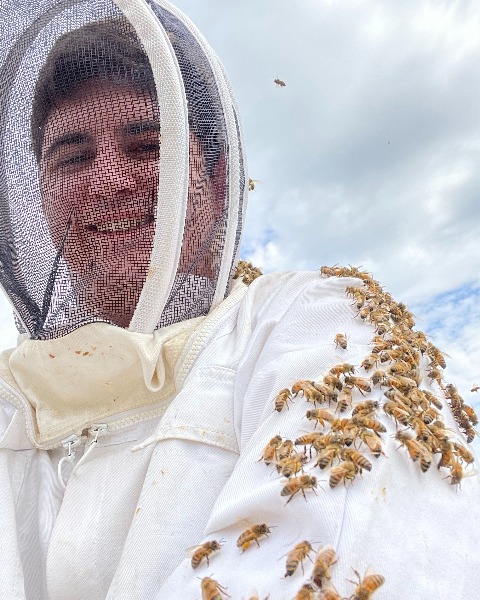
Brandon Patrick Shannon
PhD Candidate
The Ohio State University
Wooster, Ohio
Robyn S. Wilson
Professor of Risk Analysis and Decision Science
The Ohio State University
Columbus, Ohio
Reed M. Johnson
Associate Professor
The Ohio State University
Wooster, Ohio
Honey bee pollination services are essential to the production of almonds in California, where nearly 90% of the nation’s managed honey bee population are needed to satisfy the pollination needs of this crop. However, beekeepers providing pollination services for almonds have reported colony losses attributable to pesticide applications. Losses due to pesticide application may be attributable to adjuvants, which are often added to pesticide tank mixtures to improve pesticide application properties but can cause lethal and sublethal effects to honey bees and other bee species. Yet, 70% of almond-bearing orchards received an adjuvant application during bloom in 2021, indicating a misperception of adjuvant risk to honey bees. We interviewed experts in the field of adjuvant toxicity to honey bees to generate qualitatively model the risks of adjuvants and pesticide tank mixes to honey bees. We aim to interview pesticide applicators of almonds using a mental models approach to identify the key misperceptions and knowledge gaps in adjuvant risk to honey bees. Differences between the expert and audience risk perception will be targeted through a pesticide applicator training program that seeks to better communicate adjuvant risk to its most influential stakeholders. This presentation details the benefits and challenges of performing risk communication and decision science in the field of pesticide application. This case study will inform improved risk communication and extension for researchers so that information can be better communicated to decision makers.